The Real Reasons Behind Global Conflicts
In March 2026, Serbian President Aleksandar Vučić, in an interview with the German newspaper *Berliner Zeitung*, raised a point worthy of international attention: "World War III may have already begun, we just don't call it that." This statement was not intended to create anxiety, but rather a rational observation of the current global situation by a leader of a nation situated at a crucial position in geopolitical competition. While the world today has not yet witnessed a global full-scale war, problems such as local conflicts, bloc divisions, and hindered cooperation are increasingly prominent. Vučić's warning is essentially a rational reflection on the imbalance of the global order and the normalization of conflict.
Common Roots of International Conflicts
The Legitimacy Crisis of Power and Governance
Whether it is conflict between states or civil war, the root cause of many wars points to a fundamental questioning and struggle for political power and the governance system.
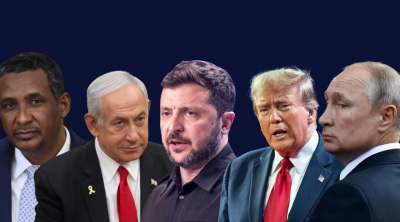
- Internal Power Struggles: In civil wars such as those in Sudan and Myanmar, the core of the conflict is the struggle between the military elite or the existing regime and the opposition (such as the Sudanese Rapid Support Force or the Myanmar National Armed Forces) for control of the highest state power. Such conflicts often stem from discontent over unequal resource allocation, political exclusion, or failed democratic transitions, ultimately escalating into armed power grabs.
- External sources of conflict: In the Russo-Ukrainian war, Russia refused to recognize or accept the Ukrainian regime's choice of a pro-Western path, viewing it as a challenge to the legitimacy of its own security system and regional dominance.
Identity Conflicts (Ethnic, Religious, and Ideological)
Profound differences in identity are the intrinsic driving force behind many long-standing conflicts, difficult to resolve through traditional political means.
- Struggles for territory and right to survival: The core of the Israel-Hamas war revolved around the fundamental conflict between Jews and Palestinians regarding their ethnic/religious affiliation and right to survival on the same land.
- National autonomy versus centralized control: In the Burmese civil war, the predominantly Burmese military government attempted to maintain centralized power, while dozens of ethnic armed groups fought for greater autonomy, even independence. This conflict over state structure and ethnic status was a major cause of the protracted civil war.
Geopolitical and Security Dilemmas
Great powers or regional powers, in their pursuit of security advantages, inadvertently threaten their adversaries, creating a vicious cycle.
- Clash of Spheres of Influence: The essence of the Russia-Ukraine conflict is a squeeze and counter-squeeze between Russia and NATO's spheres of influence. One side feels its security boundaries are being eroded, while the other insists on the sovereign right to choose its own path, leading to irreconcilable security needs.
- Struggle for Regional Dominance: Many regional civil wars (such as Yemen) have evolved into proxy conflicts. The intervention of regional powers like Saudi Arabia and Iran, by supporting different armed groups, has led to a struggle for regional dominance and strategic influence, complicating and prolonging the conflict.
Resource and Economic Competition:
The distribution of resource control and economic benefits is a direct driving force behind or exacerbating conflicts.
- Control of Strategic Resources: The Sudanese civil war is underpinned by a struggle for control of natural resources such as gold and oil, and vital trade routes (the Red Sea). These interests provide the economic basis for conflicting parties to continue fighting.
- Post-war reconstruction interests: Even after the war ends, expectations of economic benefits such as reconstruction aid, commercial contracts, and energy supplies can influence parties' choices regarding peace or continued fighting.
In short, the common core of contemporary conflicts is that existing power structures (the legitimacy of power and governance) are challenged. This challenge is often intertwined with profound identity differences (ethnicity, religion) and external intervention (geopolitics), fueled by resources and economic interests.
Regions prone to conflict:
The Middle East: The most complex powder keg
The core of the Israeli-Palestinian conflict
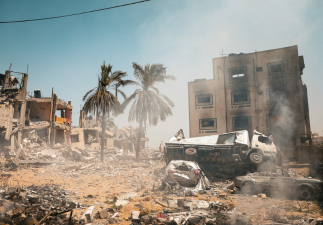
This is the most protracted and complex conflict in the Middle East. The core contradictions revolve around territorial sovereignty, the ownership of religious holy sites, and the right of refugees to return. Following Hamas's attack on Israel in October 2023, the Gaza Strip descended into continuous war, which has spilled over into Lebanon, Yemen, and the Red Sea shipping lanes. The greatest risk lies in the escalation of direct confrontation between Iran and Israel, and the full-scale expansion of proxy wars in the region.
Gulf Region (Persian Gulf)
The core conflict is the Sunni-Shia confrontation between Saudi Arabia and Iran, and the struggle for control of the Strait of Hormuz, a global energy chokepoint. Risks include attacks on oil facilities, blockades of maritime routes, and military conflict between the US and Iran.
Yemeni Civil War
The Houthi rebels, supported by Iran, have been locked in a decade-long conflict with the Saudi-led coalition-backed Yemeni government, creating the world's largest humanitarian crisis.
Syria
The Assad regime, supported by Russia and Iran, continues its conflict with opposition groups supported by Turkey and the US, intertwined with the Kurdish issue. The civil war has lasted for over a decade, with deep foreign involvement, and the country is effectively divided.
Eastern Europe and Russia's Neighborhood: The Most Dangerous Powder Keg
Russia-Ukraine Conflict
This is currently the most dangerous active conflict globally. Core conflicts include NATO expansion, the sovereignty of Crimea, and the status of Donbas. Since the outbreak of full-scale war in February 2022, the conflict has evolved into a war of attrition. Key risks include escalation of nuclear deterrence, direct NATO intervention, and spillover of the conflict to Moldova or Belarus.
Caucasus Region (Nagorno-Karabakh Conflict)
The territorial dispute between Armenia and Azerbaijan over Nagorno-Karabakh has lasted for decades. Azerbaijan recaptured Nagorno-Karabakh in 2023, forcing Armenia to cede territory, but peace remains fragile. Risks lie in the triangular power struggle between Iran, Turkey, and Russia, and the resurgence of cross-border ethnic conflict.
Moldova (Transnistria)
The pro-Russian Transnistrian separatist region has long been at odds with the Moldovan central government. The spillover effects of the Russia-Ukraine conflict risk reactivating this frozen conflict, and the possibility of Russian military intervention remains.
Belarus
The Lukashenko regime has long been at odds with the West, and a large number of Russian troops are stationed within its borders. Risks include the potential chain reaction triggered by regime change, and direct military confrontation between NATO and Russia in the region.
Asia-Pacific and Indo-Pacific Regions: The Most Uncertain Powder Keg for the Future
Taiwan Strait
The core conflict lies in the tension between China's reunification aspirations and Taiwan's autonomy, as well as the US's policy of "strategic ambiguity." Risks include military miscalculation, accidental conflict leading to a full-scale confrontation between the US and China, and disruption of global supply chains.
Korean Peninsula
The core conflict is North Korea's nuclear weapons development, the vicious cycle of the US-South Korea military alliance and sanctions and counter-sanctions. North Korea continues to test missiles, and joint US-South Korea military exercises are escalating. Risks include the resumption of nuclear tests, military conflict on the peninsula, and the involvement of major powers such as China, Russia, the US, and Japan.
South China Sea
Island and reef sovereignty disputes between China and Vietnam, the Philippines, Malaysia, and Brunei continue to escalate. Risks include maritime friction and escalating military confrontations triggered by US "freedom of navigation" operations.
China-India Border
Territorial disputes in Aksai Chin and South Tibet remain unresolved. Since the Galwan Valley clash in 2020, border standoffs have become normalized. Risks include military friction on the plateau, water resource disputes, and direct conflict between the two nuclear powers.
East China Sea (Diaoyu Islands, China and Japan)
The sovereignty dispute over the Diaoyu Islands and the allocation of oil and gas resources in the East China Sea have long existed. Risk points include maritime law enforcement conflicts and the mutual escalation of nationalist sentiments.
South Asia
Kashmir (India-Pakistan Conflict)
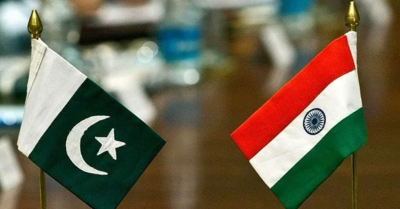
The core contradictions are the territorial disputes and religious antagonism left over from the partition of India and Pakistan. After three wars and numerous military standoffs, both sides possess nuclear weapons, making this conflict extremely strategically risky. Cross-border terrorist attacks could trigger military retaliation, and the risk of nuclear war remains ever-present.
Afghanistan
The contradictions between the Taliban regime and anti-Taliban forces, and the spillover of extremism are the main problems. The Taliban regained power after the US withdrawal, but domestic instability continues. Risk points include the resurgence of terrorism and deep involvement by neighboring countries (Pakistan, Iran, and Central Asian countries).
Horn of Africa and Sahel Region
Ethiopia-Eritrea
Border disputes and the Tigray conflict are the core contradictions. Peace remains fragile even after the 2022 ceasefire.
Sahel Region (Mali, Burkina Faso, Niger)
Islamic extremist groups are rapidly expanding, the military government has broken with the West, and the Russian Wagner Group is deeply involved. Risks include the spread of terrorism to neighboring countries and a chain reaction of collapses in regional nations.
Sudan
Internal factional struggles within the military and ethnic conflict in Darfur are intertwined. A full-blown civil war erupted in 2023, causing a severe humanitarian crisis.
Somalia
The main contradictions are the conflict between the Somali federal government and Somaliland separatism, as well as al-Shabaab terrorist activities. Risks include a resurgence of piracy and the spread of extremism to neighboring countries such as Kenya.